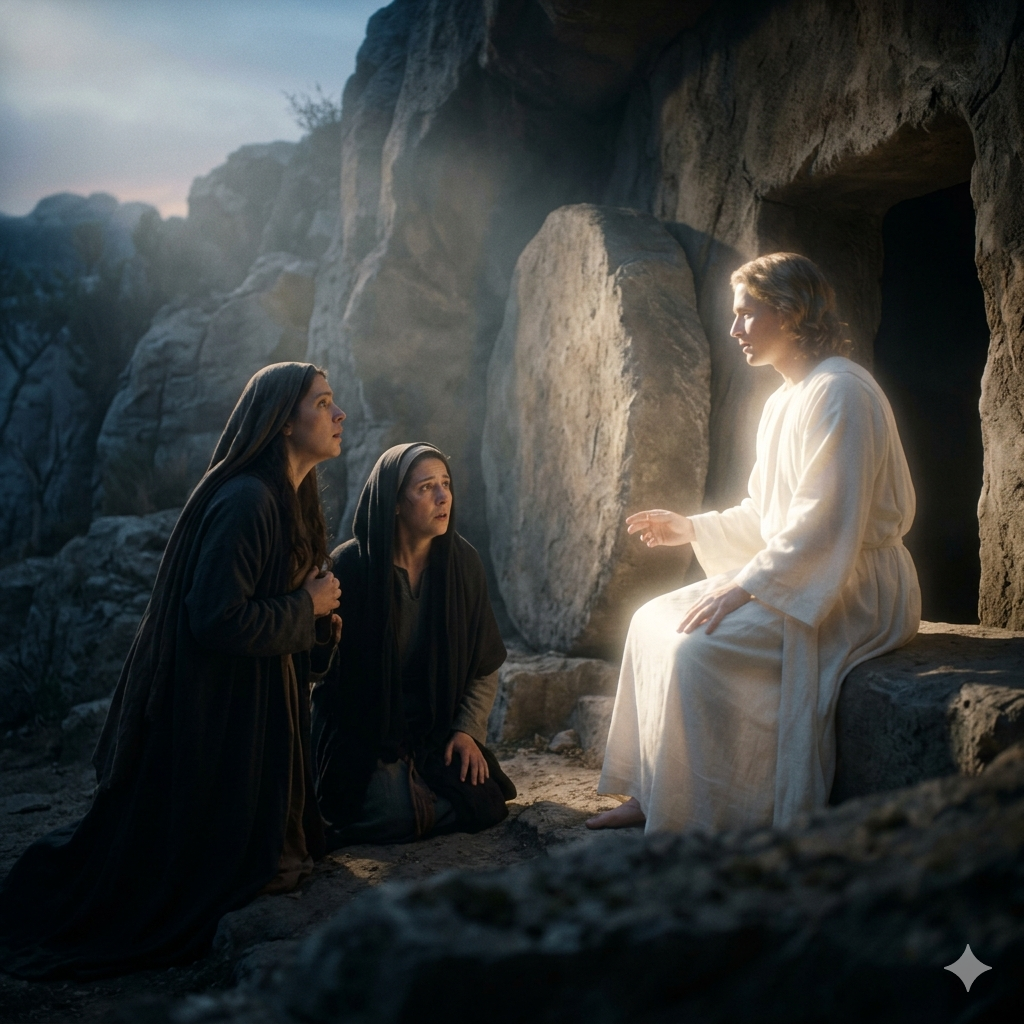

Entonces el ángel les dijo a las mujeres: «¡No tengan miedo!» (Mateo 28:5-6)
Por: Phyllis Zagano*
Texto original de The Irish Catholic.
Los cristianos deben agradecer a María Magdalena y a las demás mujeres la noticia de la Resurrección. Mateo, Marcos, Lucas y Juan relatan los mismos acontecimientos. Algunos detalles difieren, pero es evidente que María Magdalena y otras mujeres encontraron la tumba de Jesús vacía y que se lo comunicaron a los apóstoles. Pedro y Juan les creyeron y fueron a la tumba.
¿Qué podemos concluir de esta historia, de este relato de la Resurrección de Jesucristo, proclamada por primera vez por mujeres?
¿Qué nos dice sobre Jesús, sobre las mujeres y sobre la Iglesia?
Hoy en día, en todo el mundo, se debate ampliamente sobre la ordenación de mujeres. La Santa Sede afirmó en 1994 que la Iglesia no tenía autoridad para ordenar mujeres sacerdotes. Desde 1973, seis comisiones vaticanas estudiaron la posibilidad de que las mujeres fueran incluidas en el diaconado, y todas dejaron el tema abierto a un mayor discernimiento.
La cuestión de la ordenación de mujeres sacerdotes depende de si se puede modificar la doctrina actual. La cuestión de la ordenación de mujeres diaconisas sigue abierta.
Mientras continúan estos debates, sería conveniente centrarse en lo que se puede hacer de inmediato.
Tras la clausura del Concilio Vaticano II, el Papa Pablo VI creó dos nuevos ministerios laicos: el de lector y el de acólito. Estos sustituyeron a las órdenes menores de portero, lector, exorcista y acólito, y a la orden mayor de subdiácono del cursus honorum medieval (curso de honor), que conducía al diaconado y al sacerdocio. Durante muchos años, solo los hombres destinados a la ordenación eran investidos formalmente y debían ejercer como lectores y acólitos antes de su ordenación.
La Asamblea Especial de 2019 del Sínodo de los Obispos para la Región Panamazónica solicitó que todos los laicos, incluidos aquellos no destinados a la ordenación, pudieran optar a la investidura formal como lectores y acólitos.
El Papa Francisco estuvo de acuerdo. En 2021, su Carta Apostólica Spiritus Domini modificó el Derecho Canónico. El Canon 230 § 1 ahora establece: «Los laicos que posean la edad y las cualificaciones establecidas por decreto de la conferencia episcopal podrán ser admitidos de forma permanente, mediante el rito litúrgico prescrito, a los ministerios de lector y acólito».
En 2022, el Papa Francisco invistió a mujeres de Italia, Corea del Sur, Pakistán y Ghana como lectoras. Durante los años siguientes, algunas diócesis de ciertos países comenzaron a investir a mujeres en uno o ambos ministerios laicales. Los obispos irlandeses aprobaron la introducción de estos ministerios laicales durante su reunión de primavera de 2022, pero la investidura formal de hombres y mujeres como lectores y acólitos no se ha generalizado en Irlanda. Sin embargo, el Sínodo sobre la Sinodalidad solicitó específicamente que los «nuevos ministerios» fueran aceptados en toda la Iglesia.
Un punto interesante a recordar sobre los nuevos ministerios de lector y acólito es que, en realidad, no son tan nuevos. A mediados del siglo XVI, el Concilio de Trento determinó que solo las personas formalmente designadas para diversos roles litúrgicos debían desempeñarlos. Solo los lectores debían cumplir con los deberes litúrgicos de los lectores, solo los acólitos con los de los acólitos, y así sucesivamente. Varios siglos después, la sabiduría de Trento ha regresado a la Iglesia.
Unos meses después de modificar el derecho canónico para incluir a mujeres y hombres no destinados a la ordenación como lectores y acólitos, el Papa Francisco creó un ministerio completamente nuevo: el de catequista. Su Carta Apostólica Antiquum Ministerium se dirige a la misión declarada de la Iglesia: la evangelización. Según la Santa Sede, el catequista se instala en un ministerio laico vocacional estable que requiere una formación especial. El catequista es maestro, testigo y compañero en la formación de la fe. La definición de este nuevo ministerio amplía la noción de catequesis, llevando al catequista ya establecido más allá de los límites del aula y la instrucción religiosa. Algunos se preguntan si, en la práctica, los catequistas establecidos podrían predicar durante la celebración eucarística.
Antiquum Ministerium señala que el ministerio del catequista es antiguo, y menciona que san Pablo escribió sobre él en su carta a la Iglesia de Corinto: «A algunos Dios ha designado en la Iglesia para ser, primero, apóstoles; segundo, profetas; tercero, maestros…».
En su Carta Apostólica, Francisco también recuerda al lector que el Papa Pablo VI alentó el ministerio del catequista, lector y acólito. Asimismo, señala que Lumen Gentium, la Constitución Dogmática sobre la Iglesia del Concilio Vaticano II, afirma que los pastores «no fueron ordenados por Cristo para asumir solos toda la misión salvífica de la Iglesia hacia el mundo» (LG30).
Unos meses después, el Papa Francisco convocó el Sínodo sobre la sinodalidad.
Mientras la Iglesia celebra la maravilla de la Resurrección y las alegrías de la Pascua, ¿puede ampliar su visión para acoger a lectores, acólitos y catequistas ya investidos?
*Phyllis Zagano es investigadora en la Universidad de Hofstra, Hempstead, Nueva York, EE. UU. Es autora de varios libros y artículos sobre la mujer en el ministerio. Su libro más reciente, El Vaticano y las diaconisas (Orbis Books), se publicará a mediados de mayo de 2026.
Texto original en inglés
Christ is Risen!
Then the angel said to the women: “Do not be afraid!” (Matt 28:5-6)
By Phyllis Zagano
Christians have Mary Magdalene and the other women to thank for the news of the Resurrection. Matthew, Mark, Luke, and John recount the same happenings. Some details are different, but it is quite clear that Mary Magdalene and others found Jesus’s tomb empty and that they told the apostles. Peter and John believed them and went to the tomb.
What are we to make of this story, this report, of the Resurrection of Jesus Christ that women first proclaimed?
What does it say about Jesus, about women, and about the Church?
Today, around the world, there is considerable conversation about women’s ordination. The Holy See affirmed as recently as 1994 that the Church did not have the authority to ordain women as priests. Since 1973, six Vatican commissions studied whether women could be included in the diaconate, and each left the topic open to more discernment.
The question about women priests rests on whether the current teaching can be changed. The question about women deacons remains open.
As those discussions continue, it might be well to focus on what can be done immediately.
After the close of the Second Vatican Council, Pope Paul VI created two new lay ministries: the installed lector and acolyte. These replaced the minor orders of porter, lector, exorcist, and acolyte, and the major order of subdeacon of the medieval cursus honorum (course of honor), which led to the diaconate and priesthood. For many years, only men destined for ordination were formally installed and required to minister as lector and acolyte before their ordinations.
The 2019 Special Assembly of the Synod of Bishops for the Pan-Amazon Region asked for all lay persons, including persons not destined for ordination, to be eligible for formal installation as lectors and acolytes.
Pope Francis agreed. In 2021, his Apostolic Letter Spiritus Domini modified Canon Law. Canon 230 § 1 now states, “Lay persons who possess the age and qualifications established by decree of the conference of bishops can be admitted on a stable basis through the prescribed liturgical rite to the ministries of lector and acolyte.”
In 2022, Pope Francis installed women from Italy, South Korea, Pakistan, and Ghana as lectors. During the years that have followed, some dioceses in some countries have begun installing women to one or both lay ministries. The Irish Bishops approved the introduction of these lay ministries during their Spring 2022 meeting, but the formal installation of men and women as lectors and acolytes has not been widely adopted in Ireland.
Yet the Synod on Synodality specifically asked that the “new ministries” be accepted throughout the Church.
An interesting point to recall about the new ministries of lector and acolyte is that they are not really that new at all. In the middle of the sixteenth century, the Council of Trent determined that only people formally designated in various liturgical roles should perform them. Only lectors should perform the liturgical duties of lectors, only acolytes should perform the liturgical duties of acolytes, and so on. Several hundred years later, the wisdom of Trent has returned to the Church.
A few months after changing canon law to include women and men not destined for ordination as lectors and acolytes, Pope Francis created a completely new ministry, that of catechist. His Apostolic Letter Antiquum Ministerium is directed at the stated mission of the Church: evangelization. According to the Holy See, the catechist is installed in a stable vocational lay ministry that requires special training. The catechist is teacher, witness, and companion in faith formation. The definition of this new ministry expands the notion of catechetics, moving the installed catechist beyond the confines of the classroom and religious instruction. Some wonder if, in application, installed catechists would be able to preach within the Eucharistic celebration.
Antiquum Ministerium points out that the ministry of catechist is ancient, noting Saint Paul wrote about it in his letter to the Church at Corinth: “Some people God has designated in the Church to be, first, apostles; second, prophets; third, teachers….”
In his Apostolic Letter, Francis also reminds the reader that Pope Paul VI encouraged the ministry of catechist, lector, and acolyte. He also notes that Lumen Gentium, Vatican Two’s Dogmatic Constitution on the Church, states that pastors were “not ordained by Christ to take upon themselves alone the entire salvific mission of the Church toward the world.” (LG30).
A few months later, Pope Francis called the Synod on Synodality.
As the Church celebrates the wonder of the Resurrection and the joys of Easter, can it expand its vision to welcome installed lectors, acolytes, and catechists?
——————-
Phyllis Zagano holds a research appointment at Hofstra University, Hempstead, New York, USA, and is the author of several books and articles about women in ministry. Her newest book, The Vatican and Women Deacons (Orbis Books) will be published in mid-May 2026.